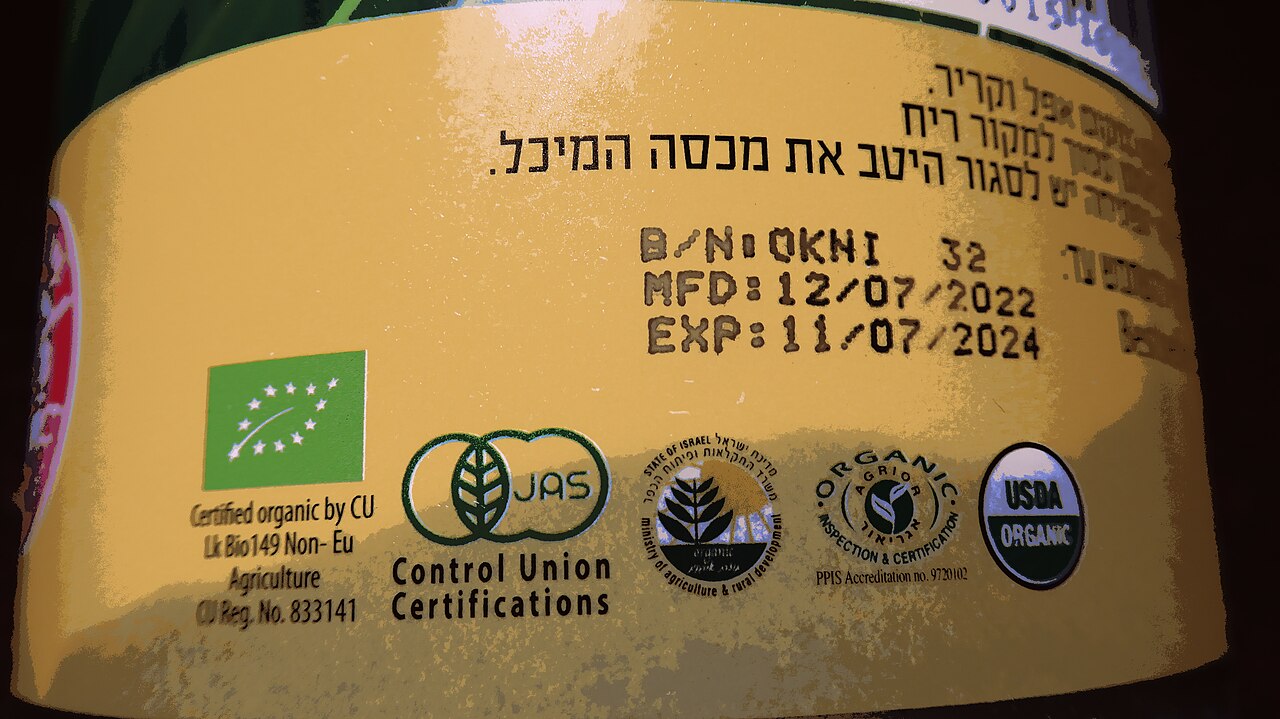
Open your refrigerator and you will find a small library of stamped dates: sell by, use by, best if used by, freeze by. Most Americans read every one of them as an expiration date and throw food away the day it passes. That instinct feels responsible. It is also, in most cases, wrong, and it quietly costs households real money every month in food that was perfectly fine.
Here is the part that surprises almost everyone: with one narrow exception, the federal government does not require those dates at all, and most of them are statements about quality, not safety. Understanding what each phrase actually means lets you stop paying to throw good food in the trash while still protecting your family from the food that genuinely has gone bad.
The dates are mostly voluntary
According to the USDA’s Food Safety and Inspection Service, federal regulations do not require product dating on foods, with the exception of infant formula. Manufacturers stamp dates voluntarily, as their own estimate of when the product will taste and perform its best. Some states layer on their own dating rules for certain products, which is why milk labeling can look different across state lines, but the date on your yogurt is fundamentally the manufacturer’s quality opinion, not a government safety deadline.
What each phrase means
The USDA’s guidance breaks down the common phrases like this. “Best if Used By” (or “Best if Used Before”) is purely about flavor and quality: past that date the product may not be at its peak, but that says nothing about safety. “Sell By” is a message to the store, not to you: it tells the retailer how long to display the product, and a properly stored item is generally still good for some time at home afterward. “Use By” is the manufacturer’s last recommended date for peak quality. Even that one is a quality call rather than a safety cutoff, except on infant formula. “Freeze By” simply tells you when to freeze a product to hold its quality.
None of these phrases means “unsafe the next morning.” Food does not read the calendar. What makes food unsafe is time, temperature, and contamination, not the number printed on the package.
The one true expiration date: infant formula
Infant formula is the exception, and it is a real one. Federal rules require a “Use By” date on formula, and it should be honored, because past that date the formula may no longer deliver the nutrient levels printed on the label and its quality is no longer assured. Do not buy or feed formula past its date, full stop. It is the one stamped date in the store that works the way most people assume all of them do.
How to judge food after the date
For everything else, the date is a starting point and your storage habits are the real story. A sealed package of shelf-stable food kept in a cool pantry can be fine well past its best-by date, while chicken left two hours on a summer counter is unsafe long before any printed date arrives. The government’s food safety site keeps cold storage charts showing how long common foods actually keep in the refrigerator and freezer once opened or purchased, and those windows are far more useful than the stamp on the front.
Use your senses, backed by those charts. Spoiled food usually announces itself with an off odor, a slimy or sticky texture, or visible mold. If a food shows those signs, toss it regardless of the date. If it has been stored properly, looks and smells normal, and falls within the storage-chart window, a passed best-by date alone is not a reason to throw it out. One caution: some hazards, like bacteria growing in food left too long at room temperature, produce no smell at all, which is why the time-and-temperature rules matter more than the sniff test alone.
A free tool that settles arguments
If you do not want to memorize storage windows, the federal FoodKeeper app, built by USDA with Cornell University and the Food Marketing Institute, does it for you. Look up nearly any food and it shows how long it keeps in the pantry, refrigerator, and freezer, and it works on the web or as a phone app. It is the fastest way to answer the eternal kitchen question of whether the eggs are still good.
The money side of the date stamp
Why does this matter for your wallet? Because confusion over date labels is a major driver of food thrown away at home, and food you throw away is food you paid full price for. Every carton of milk dumped on its sell-by date, still days from turning, is a small refund you declined. The freezer is the great loophole here: nearly anything approaching its date can be frozen and rescued, from bread to meat to shredded cheese. A household that learns three habits, trusting storage charts over stamped dates, checking food with its senses, and freezing what it cannot finish, will waste noticeably less and buy noticeably less to replace it. The date stamp is a manufacturer’s promise about peak taste. Your food budget deserves better than treating it as a fire alarm.