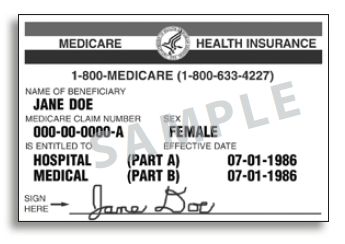
Medicare has a way of punishing procrastination that most people only learn about after it is too late: sign up for Part B later than your rules allow, and your monthly premium goes up 10 percent for each full 12-month period you could have had Part B but did not. And unlike most financial penalties, this one does not expire. You typically pay it every month, for as long as you have Part B, for the rest of your life. Medicare spells out the rule on its costs page.
With the standard Part B premium at $202.90 a month in 2026, per the CMS premium announcement, each year of delay adds roughly $20 a month at current rates. Wait three years and you are paying about 30 percent extra, forever, and the penalty is recalculated against the standard premium as it rises each year. The good news: the penalty is entirely avoidable if you know which of three enrollment windows applies to you.
Window one: your Initial Enrollment Period at 65
Everyone gets a seven-month Initial Enrollment Period: the three months before the month you turn 65, your birthday month, and the three months after. If you are already collecting Social Security when you turn 65, you are enrolled in Parts A and B automatically and can stop worrying. Everyone else needs to act. Sign up during the first three months and coverage starts the month you turn 65; sign up later in the window and it starts the month after you enroll. Medicare’s sign-up guide covers the timing.
Miss this window with no qualifying coverage, and the penalty clock starts ticking.
Window two: the Special Enrollment Period for workers
Here is the part that keeps 68-year-old employees penalty free. If you are still working at 65 and covered by a group health plan through your own or your spouse’s current employment, you can delay Part B without penalty. When that employment or coverage ends, you get a Special Enrollment Period: eight months to sign up, penalty free, and you can also enroll any time while the employment coverage is still in place. Enrollment goes through Social Security, which explains the process at ssa.gov/medicare/sign-up.
The traps hide in the word current. COBRA is not current employment coverage. Neither is retiree health insurance, severance-package coverage, or a Health Insurance Marketplace plan. People coast on COBRA for 18 months assuming they are safe, then discover the penalty applies and, worse, that they missed their eight-month window and must wait for the general enrollment period, months without coverage options. If your employer has fewer than 20 employees, be extra careful: Medicare generally becomes your primary insurance at 65, and delaying can leave you effectively uninsured even while premiums are being paid.
Window three: the General Enrollment Period, the expensive fallback
If you miss both windows, you can still enroll between January 1 and March 31 each year, with coverage starting the month after you sign up. This is the catch-all, and it is where the penalty lands. It exists so no one is locked out forever, but it should be the last resort, not the plan.
How the penalty math actually works
The penalty counts full 12-month periods between when your Initial Enrollment Period ended and when you finally signed up, minus any time you had qualifying employer coverage. Fourteen months late is one full period: 10 percent. Twenty-six months is two: 20 percent. The percentage then rides on top of the standard premium every year afterward. Because it is a percentage rather than a fixed dollar amount, it grows in dollar terms whenever premiums rise. A person paying a 30 percent penalty in 2026 owes roughly $60 a month above the standard $202.90, over $700 a year, for coverage identical to their neighbor’s.
A narrow escape hatch exists: if you delayed because of misinformation from a federal employee, or in certain other limited situations, you can ask for equitable relief, and special rules protect volunteers abroad and some others. But these are exceptions argued case by case, not something to count on.
A simple decision checklist
Approaching 65, ask yourself three questions. Am I already drawing Social Security? If yes, enrollment is automatic. If not, will I have group coverage from my own or my spouse’s current employer after 65, from an employer with 20 or more employees? If yes, you can safely delay Part B, but calendar the eight-month special period for the day that job or coverage ends. If no, sign up during your seven-month initial window, full stop.
One last nudge: do not confuse Part A and Part B decisions. Premium-free Part A is easy to take at 65 for most people, but Part B carries the monthly premium, so it is Part B people are tempted to skip, and Part B where the 10-percent-per-year meter runs. Ten minutes with a calendar around your 65th birthday buys you a lifetime of standard-rate premiums. It is one of the cheapest insurance decisions you will ever make correctly.